Last updated 2026-08-19
TL;DR
Alaska has no official center pivot repair fee schedule. You pay Lower 48 parts plus freight, then labor at Alaska trade wages from BLS tables. No license is named center pivot repair, but contractor registration and electrical administrator rules can apply. Parts on a Railbelt shelf can finish in a day. Air freight and inspections add calendar time. Confirm fees with the licensing board.
How much does center pivot repair cost in Alaska?
There is no public Alaska price list for center pivot repair. You pay the same catalog parts a shop in Idaho or Nebraska pays, then you add freight into Anchorage, Fairbanks, or a bush strip, then you add labor at Alaska trade wages. A nozzle and regulator walk can stay in the low hundreds if the parts already sit on a Wasilla or Delta shelf. A gearbox, collector ring, span joint, or panel job climbs fast once air freight and an electrician show up.
Nobody runs a clean statewide survey of Alaska pivot invoices. The closest official picture is how small the farm base is. The 2022 Census of Agriculture state profile for Alaska counted 1,176 farms [10]. The 2017 profile counted 990 farms and 849,732 acres of land in farms [11]. That is a thin installed base. Dealers do not publish a pivot menu the way a tire shop posts alignments.
Labor is the one line you can price with a straight face. The Bureau of Labor Statistics Occupational Employment and Wage Statistics program posts current mean wages for Alaska on a state table [6]. The two occupations that eat most billed hours are electricians (SOC 47-2111) and farm equipment mechanics and service technicians (SOC 49-3041) [7] [8]. Pull those two rows before you estimate a job. Alaska trade wages sit above many Lower 48 shops. I would not bid a wired repair off a Midwest shop rate and hope freight is the only gap.
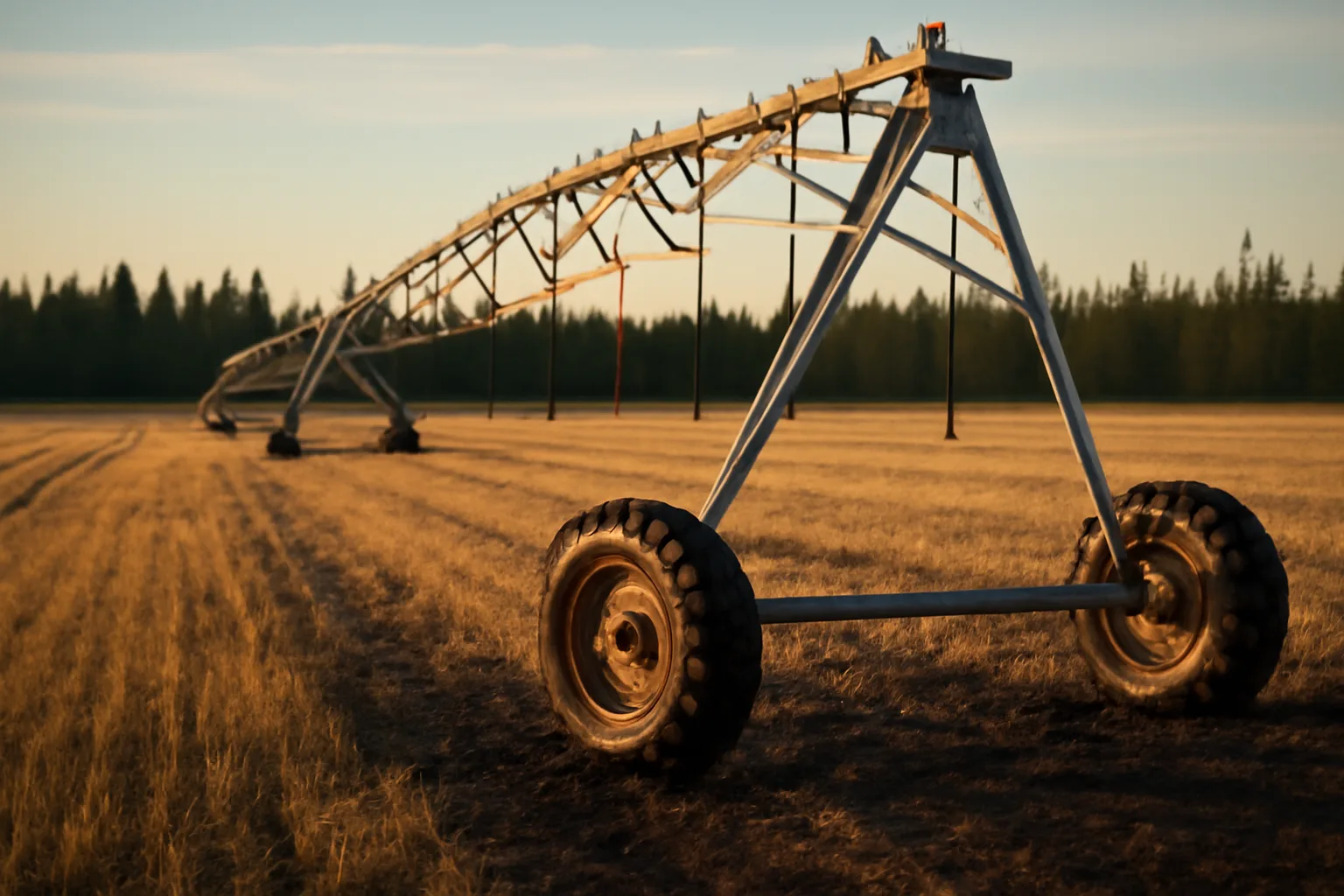
Parts follow national catalogs. Sprinkler packages, pressure regulators, drive motors, tower boxes, and gearboxes are the same SKUs used on a High Plains machine. Colorado State University Extension fact sheet 4.712 describes the machine you are fixing: a motorized lateral that rotates around a fixed pivot point and carries sprinklers on a truss [14]. Kansas State Research and Extension MF2870 treats the sprinkler and regulator package as a replaceable wear system, not a forever part [15]. Read both before you tell a grower the nozzles are fine because the spans still roll.
Power cost is not a repair line, but it shows up when you replace a pump motor, VFD, or generator feed. The U.S. Energy Information Administration state electricity profile for Alaska publishes average retail prices, and they run well above the U.S. all-sectors average in most years [13]. A tired motor that was barely tolerable on cheap Midwestern power looks worse on a Railbelt or village rate.
My working method is simple. Price the part from two Lower 48 sources. Add the real freight quote, not a guess. Apply your loaded labor from the current BLS Alaska wage plus your truck, insurance, and deadhead to the field. Then add a weather and access contingency. If the field is on the road system, the contingency is smaller. If the last leg is a Super Cub or a barge, it is not.
I would not sell a grower a “tune-up package” with a made-up Alaska multiplier. I would show the freight invoice. People accept a painful number when they can see the airway bill. They do not accept a vague Alaska tax.
Why is published center pivot repair pricing so thin in Alaska?
Published prices need volume, and Alaska does not have it. The 2022 Census of Agriculture counted 1,176 farms in the state [10]. The 2017 Census counted 990 [11]. Irrigation is only a slice of that already small set, and NASS often withholds fine breakouts when a single cell would identify a handful of operators. You will not find a clean official count of center pivots sitting on Alaska ground.
Most of the machines that do exist sit on the road-connected Railbelt and in the Delta Junction barley and hay country. A few show up in the Matanuska-Susitna and Kenai farm blocks. That is not a dealer network with Saturday parts counters every fifty miles. It is a handful of farms, a handful of mechanics, and a long wait when the wrong gearbox lands in Anchorage.
Compare that with a state that actually prints irrigation cost notes. Center pivot repair cost in Idaho sits in a dense pivot belt. Center pivot repair cost in Colorado does too. Alaska does not. Treat any “average repair cost” you see on a national blog as a Lower 48 number wearing a parka.
The honest dataset is the Census farm count, the BLS wage table, and your freight bill. That is enough to bid. It is not enough to publish a statewide average and pretend it is science.
Do you need a license for center pivot repair in Alaska?
No Alaska license is named center pivot repair. You still may need paper. Hold out as a construction contractor and Alaska requires a certificate of registration. Act as an electrical administrator and you need that license. Almost every shop also needs a state business license. Confirm the current application, bond, and fee with the Division of Corporations, Business and Professional Licensing. Do not treat this article as a permit.
The contractor rule is blunt. Alaska Statute 08.18.011 says, “A person may not submit a bid or work as a contractor until that person has been issued a certificate of registration by the department.” [1] Whether a pivot job counts as “construction” depends on the work. Swapping a sprinkler head on a machine you already service is farm equipment repair. Setting a new pivot point, pouring a pad, trenching a mainline, or rebuilding the service to the panel starts to look like the definition of construction in AS 08.18.171 [4]. The department, not a blog, draws that line. If the bid reads like a construction bid, register.
Electrical work is the tripwire I see shops ignore. Drive motors, collector rings, tower boxes, safety circuits, and control panels are electrical systems. Alaska licenses electrical administrators through the state’s professional licensing program [2]. Local jurisdictions can also require permits and inspections. The Municipality of Anchorage and other adopted-code areas will not care that the load sits in a barley field. Confirm with Alaska Department of Labor Mechanical Inspection and the borough before you land a new feeder or swap a panel.
A state business license sits underneath all of that. AS 43.70 requires a person engaging in business in the state to obtain the license and pay the fee [3]. The dollar amount changes. Look it up on the business licensing program page and pay it. I would not open a mobile truck on the Parks Highway without that paper and a written scope that says what you will not touch.
Owner-operators repairing their own machine are in a different bucket than a person selling repair to the public. Homeowner and owner exemptions live in the contractor chapter, and they are narrower than people think [1] [4]. Charge neighbors and you are not doing weekend favors. Get the registration question answered in writing from the board.
Mechanical administrator licensing matters less on a standard electric pivot and more if you get into fuel-fired pumps, boilers, or certain piping. Check that program if your scope leaves the electric drive and enters the pump house [2].
ValleyRepairPath is an independent publisher, not a licensing board and not a service company. If a grower asks me what I would do before the first paid job, I would call the construction contractor program, the electrical administrators program, and business licensing, then write down the answers with the date. Boards change forms. Your notes should show you asked.
How long does center pivot repair take in Alaska?
If the part already sits in Fairbanks, Wasilla, or Delta, a clean mechanical job often finishes the same day. If the part has to leave a Nebraska or Idaho warehouse, the clock becomes a freight clock. Truck to the West Coast, air or barge to Anchorage, then a highway run or a bush leg. I have watched a simple gearbox turn into two weeks of calendar time without anyone turning a wrench slowly.
Do not promise a grower a finish date you do not control. Carriers slip. Weather parks aircraft. The department does not publish a legal time limit for private farm repairs, and anyone who sells you a guaranteed Alaska transit time is guessing. Confirm the live routing with your freight desk the morning you order.
Wired jobs add a second queue. An electrical permit and inspection, where required, insert days you cannot compress by working late [2]. A collector ring you can physically replace in three hours can sit until the inspector reaches the field. Interior summer days are long. Inspector calendars are not.
The growing season is the real deadline. Interior and some Southcentral windows are short enough that a week down in July is a yield event, not an inconvenience. NOAA and the National Weather Service publish the climate normals that set those frost shoulders. Plan rebuilds for April and October when you can. In-season work should be parts you already own.
Structural work (truss rods, spans, towers) needs calm wind and a crew that can lift. A Mat-Su afternoon can shut that down. Budget a weather day on any span job. If you have only one calm day, do not start a two-day weld.
Winterizing is not glamorous and it is not optional. Drain, park, and protect before hard freeze. That block of hours belongs on the annual clock the same way a gearbox does. Skipping it to save a trip is how you buy a split fitting in May.
What work actually shows up on an Alaska pivot bill?
The failures are ordinary. Cold, wind, and long parts lags make them expensive. Use this as a planning table, not a quote. Hours assume the part is already in the truck. Money is the part plus freight plus your BLS-based labor, which you have to calculate for the week you bid [6].
| Work | Clock time if parts are on hand | What usually adds days | License trigger to check |
|---|---|---|---|
| Sprinkler, regulator, drop | 2 to 6 hours | Wrong nozzle package on the shelf | Rarely, unless you open a circuit |
| Tire, wheel, gearbox oil | 2 to 8 hours | Size mismatch, freight | Equipment service |
| Center drive or tower gearbox | 1 to 2 days | Air freight, hoist, seized hardware | Shop skill; contractor paper if the bid is construction-like [1] |
| Collector ring, tower box, cable | 4 to 10 hours | Testing, permit, return trip | Electrical administrator rules [2] |
| Control panel or VFD | 1 to 3 days | Program, feeder, inspection | Electrical, often a permit |
| Span, truss, tower structure | 2 to 5 days | Wind, alignment, extra steel | Contractor registration more likely [1] [4] |
Kansas State’s sprinkler publication is the right first read when the complaint is “pattern looks tired” rather than “it will not move” [15]. People love to replace a motor when the regulators have been shot for three seasons.
I stock wear items. I do not stock every gearbox ratio. The $179 one-time Valley/Zimmatic Parts Kit is one way a new shop puts common wear pieces in the truck before the first emergency call, then you still order the heavy housings against a serial number. A wrong gearbox on a barge is a wasted week.
Compare your parts plan with shops in denser states. Center pivot repair cost in Arizona and center pivot repair cost in California assume next-day ground freight that Alaska does not have. Steal their job list. Do not steal their lead times.
How do freight, fuel, and travel change an Alaska repair bill?
Freight is the line that shocks Lower 48 owners. The part is cheap. The last 2,000 miles are not. Anchorage cargo (Ted Stevens) and the highway web to Fairbanks, Delta, and the Mat-Su cover most machines. Off the road system you are in air freight or barge territory. Quote that leg as its own number. Never bury it in a mystery multiplier.
Fuel and deadhead matter because the next pivot may sit three hours away, not three miles. A Fairbanks shop running to Delta burns a half day of windshield time before a wrench turns. I bill travel honestly. Hide it and you will stop answering the phone in July.
Hawaii is the only other U.S. comparison that feels honest on logistics, and even that is a stretch. Center pivot repair cost in Hawaii is another island-and-freight problem. Use it to explain the concept to a banker. Use your actual airway bill to explain it to a grower.
Insurance, lodging, and a second technician on a structural lift are real. So is a missed barge. I keep a written freight cutoff: if the crop loss per day will beat air freight, we fly the part. If it will not, we wait on surface. That conversation belongs on the first call, not after the part sits in Tacoma.
What electrical and energy rules hit a pivot repair?
Open a live circuit and you are in electrical work. Alaska’s electrical administrator program is the state paper [2]. Local permits may stack on top. I treat a new control panel, a replaced feeder, and a changed motor branch as permitted work until the inspector says otherwise. Swapping a like-for-like tower box can still be electrical work. Ask, in writing.
Lockout is not optional because the field feels informal. OSHA’s control of hazardous energy standard says it “covers the servicing and maintenance of machines and equipment in which the unexpected energization or start up of the machines or equipment, or release of stored energy, could harm employees.” [12] A pivot will start if someone else has the remote. Kill it, lock it, tag it, prove it dead. Agricultural exemptions people quote at the tailgate do not make a spinning span safe.
The EIA Alaska electricity profile is worth a printout when you discuss motor and VFD replacement [13]. High retail power makes a sick motor a cost problem more than a reliability problem. I would megger and measure current before I sell a new motor. Replacing a motor that was only thirsty because of a bad regulator package is a waste of money.
I would not let an unlicensed helper land new circuits “because it is farm equipment.” The statute language on contractors covers the person submitting the bid and doing the work, not the crop under the machine [1]. The electrical program is about the wiring, not the barley.
Does repairing a pivot change an Alaska water right?
A like-for-like repair does not create a new water right. Expanding irrigated acres, moving a point of withdrawal, or changing the use can. Alaska’s Water Use Act lives in AS 46.15. The appropriation statute is the one to read before you add spans or a second machine [5]. Confirm with the Department of Natural Resources Water Resources section. They, not the parts house, say whether your “repair” is a new appropriation.
I have watched people quietly lengthen a machine and then act surprised when the water paper does not match the ground. If the serial number and the acreage stay the same, you are probably in maintenance. If the wetted circle grows, pick up the phone.
USDA’s census tables are useful context for how little irrigated ground the state reports, but they are not your permit [10] [11]. DNR files are. Keep a copy of the existing authorization in the job folder so you do not “fix” a system into a violation.
What should a first-year Alaska shop put on paper?
Write the scope before you leave the shop. Machine make, span count, serial numbers, tower numbers, and the fault as the grower said it, not as you diagnosed it. Photo the collector ring, the panel label, and the gearbox tags. Those photos save a second freight cycle.
Invoices should split parts, freight, travel, and labor. When a banker or a crop insurer asks what happened, that split is the whole story. Blend it into one lump and you will argue all winter.
Keep torque notes, gear oil type, and any megohmmeter readings. Keep the lockout record [12]. Keep the permit number if an inspector was in the field [2]. Keep the business license and contractor registration copies in the truck, not in a drawer in town [1] [3].
I would not build a first-year shop around custom fabrication. I would build it around diagnosis, stocked wear parts, honest freight, and a written list of jobs you send to a licensed electrician. The money in year one is not a full span rebuild. The money is being the person who arrives with the right tower box.
Want a Lower 48 process check? Read how denser markets paper a job on center pivot repair cost in Illinois or center pivot repair cost in Georgia. Copy their checklist habit. Do not copy their same-day parts assumption.
When should you repair a machine versus park it?
Repair the wear system. Pause before you rebuild a bent span on a 30-year machine that already carries a tired pivot point. CSU’s description of the structure is a good reminder that you are maintaining a long truss on wheels, not a sacred object [14]. If two spans are cut, the underground wiring is original, and the panel is a museum piece, get a replacement quote from a dealer while you price the repair. Then pick.
Alaska’s small farm count means there is no deep used-span market next door [10] [11]. A used span that would be a half-day trailer run in the Columbia Basin can be a fantasy in Delta. Sometimes the “cheap” repair is a new short machine. Sometimes it is one new gearbox and a sprinkler package [15].
I replace sprinklers and regulators on a schedule. I replace structure only after measurements, not after a glance. I do not fly a full panel to a field that needs a $40 interlock switch. Ego is expensive at cargo rates.
How does Alaska compare with Lower 48 pivot country?
Labor is higher. Freight is slower. The job list is the same. That is the whole comparison. Idaho, Colorado, and California shops swim in parts and in competing quotes. You can see that world here: center pivot repair cost in Idaho, center pivot repair cost in Colorado, center pivot repair cost in California.
Hawaii is the better logistics cousin center pivot repair cost in Hawaii. Arizona heat is a different failure mode, but the electrical discipline still applies center pivot repair cost in Arizona.
Trained in the Lower 48? Keep your mechanical habits. Change your inventory and your promises. The BLS Alaska wage table is the labor reality [6]. The Census farm count is the demand reality [10]. Freight is the schedule reality. Licensing is the same kind of paper, just a smaller counter at the state [1] [2] [3].
What would I actually do before taking paid pivot work in Alaska?
I would get the business license, then ask the construction contractor program in writing whether my mobile farm-equipment scope needs registration [1] [3] [4]. I would ask the electrical administrators program which tasks I may not touch [2]. I would print the current BLS Alaska wage rows for electricians and farm equipment mechanics and build a loaded hourly from those, not from a Facebook group [6] [7] [8].
I would put sprinklers, regulators, fuses, collector brushes, and common tower-box parts on the shelf. I would not pre-buy gearboxes. I would open accounts with two Lower 48 parts houses and one freight desk that already knows Ted Stevens cargo. I would write a one-page lockout card and use it [12].
I would not advertise as a full electrical shop. I would not promise three-day turnarounds from the Midwest. I would not quote a statewide “typical cost.” I would quote this machine, this week, this freight.
Want a parts-and-paper start that is not a dealer franchise? The kit and checklist path is at /start. Use it or ignore it. The statutes and the BLS table still apply either way.
Frequently asked questions
Do you need a license for center pivot repair in Alaska?
There is no license titled center pivot repair. Selling construction-like work requires contractor registration under AS 08.18. Acting as an electrical administrator requires that license. A state business license under AS 43.70 applies to almost every shop. Confirm current forms and fees with the Division of Corporations, Business and Professional Licensing before you bid.
How much does center pivot repair cost in Alaska?
There is no official fee schedule. Cost is Lower 48 parts, plus freight into the Railbelt or bush, plus labor built from current BLS Alaska wages for mechanics and electricians. A stocked nozzle job can stay small. Gearboxes, collector rings, and panels climb when air freight and permits enter. Demand a split quote: parts, freight, travel, labor.
How long does center pivot repair take in Alaska?
On-hand mechanical parts often finish in a day. Anything ordered from the Lower 48 becomes a freight calendar, sometimes more than a week before a wrench turns. Electrical inspections and wind on span work add days. Nobody should guarantee carrier time. Confirm routing the morning you order and plan rebuilds outside the short Interior peak.
Is farm equipment repair the same as construction contracting in Alaska?
Not always. AS 08.18.171 defines contractor and construction. A like-for-like gearbox on an existing machine is usually equipment service. New pads, buried mainlines, service upgrades, and structural installs look like construction. If your bid could be read as construction, get the registration question answered in writing by the department before you submit it.
Do I need an electrical license to replace a pivot drive motor?
Drive motors, collector rings, tower boxes, and panels are electrical systems. Alaska licenses electrical administrators and local inspectors may require permits. A like-for-like swap can still be regulated work. Do not let a helper land new circuits because the load sits in a field. Ask the electrical administrators program and the local inspector what your exact task requires.
How much extra does freight to Alaska add?
Enough to dwarf a small part. Surface to Anchorage plus a highway run is one number. Air to a bush strip is another. There is no stable statewide surcharge you should trust in a blog. Get a live quote from the carrier and print it on the invoice. If daily crop loss beats air freight, fly the part. If it does not, wait.
Can I repair my own center pivot without a license?
Owner work on your own machine differs from selling repair to the public. Contractor exemptions exist but are narrower than tailgate advice. Electrical service and new feeders can still need permits. Start charging neighbors and you are in business. Get the business license and ask the contractor program how they read your facts.
What is the Alaska business license for a repair shop?
AS 43.70 requires a person engaging in business in the state to obtain the license and pay the fee. The dollar amount and term are set by the state and change. Look up the current fee on the business licensing program page. I would not roll a mobile truck without that license in the glove box and a written scope of work.
Are center pivots common in Alaska?
No. The 2022 Census of Agriculture counted 1,176 farms in Alaska. Irrigation is only a slice of that, and NASS often withholds fine equipment counts. Machines cluster on the Railbelt and around Delta Junction. That thin base is why you will not find a public statewide pivot repair price list.
Who inspects electrical work on a pivot in Alaska?
State electrical administrator rules apply, and Alaska Department of Labor Mechanical Inspection plus adopted-code municipalities can require permits and field inspections. Anchorage is stricter than an unincorporated field outside town. Call before you change a feeder or panel. An inspector calendar can exceed the wrench time on the job.
What fails most on pivots in cold, windy climates?
Sprinklers and regulators, gear oil and seals, collector rings, tower boxes, and tires. Structure fails when wind and neglected truss hardware stack up. Kansas State’s sprinkler package guidance is the right first read on pattern problems. Cold makes leaks and brittle plastics worse. The failure list matches the Lower 48. The wait for parts does not.
Does winterizing a pivot count as repair time in Alaska?
Yes. Drain, park, and protect before hard freeze. Those hours belong on the annual clock. Skipping a fall trip to save mileage is how you buy split fittings and gear damage in May, when freight is still ugly and the season is already short. Budget it as maintenance, not as an optional extra.
Should I replace a span or the whole machine?
Measure first. One gearbox and a sprinkler package is often the rational repair. Two cut spans, original underground wire, and a museum panel on a 30-year machine deserve a replacement quote beside the repair quote. Alaska has almost no next-door used-span market, so “cheap used steel” is often a fantasy. Pick with numbers, not hope.
Where do Alaska shops buy Valley or Zimmatic parts?
From the same Lower 48 catalogs and dealer channels everyone else uses, then through Anchorage cargo or surface freight. Serial-number the gearbox and panel before you order. Stock wear items locally. Do not pre-buy every housing. Confirm fit. A wrong part on a barge is a wasted week you will not get back in July.
Sources
- Alaska Statute AS 08.18.011 Registration required: A person may not submit a bid or work as a contractor until issued a certificate of registration by the department.
- Alaska CBPL Electrical Administrators program: Alaska licenses electrical administrators through the Division of Corporations, Business and Professional Licensing.
- Alaska Statute AS 43.70.020 License required: A person engaging in a business in the state must obtain a state business license and pay the required fee.
- Alaska Statute AS 08.18.171 Definitions: Alaska defines contractor and construction for purposes of who must register under AS 08.18.
- Alaska Statute AS 46.15.040 To appropriate water: Appropriation of water in Alaska is governed by AS 46.15, which matters if irrigated acres or withdrawal change.
- BLS OEWS May current estimates, Alaska statewide: BLS publishes current occupational employment and mean wage estimates for Alaska, including construction and installation trades.
- BLS OEWS Electricians SOC 47-2111: Electricians are classified as SOC 47-2111 in the Occupational Employment and Wage Statistics program.
- BLS OEWS Farm Equipment Mechanics and Service Technicians SOC 49-3041: Farm equipment mechanics and service technicians are classified as SOC 49-3041 in OEWS.
- USDA NASS 2022 Census of Agriculture, Alaska Chapter 1 Table 1: The 2022 Census of Agriculture publishes official Alaska state-level farm counts and related tables.
- USDA NASS 2022 Census of Agriculture, Alaska state profile: The 2022 Census of Agriculture Alaska profile reports 1,176 farms in the state.
- USDA NASS 2017 Census of Agriculture, Alaska state profile: The 2017 Census of Agriculture Alaska profile reports 990 farms and 849,732 acres of land in farms.
- OSHA 29 CFR 1910.147 Control of hazardous energy: The lockout/tagout standard covers servicing of machines where unexpected energization or startup could harm employees.
- U.S. EIA Alaska Electricity Profile: EIA publishes Alaska average retail electricity prices and related generation statistics on the state electricity profile.
- Colorado State University Extension Fact Sheet 4.712 Center Pivot Irrigation: A center pivot is a motorized lateral that rotates around a fixed pivot point and carries sprinklers on a truss.
- Kansas State Research and Extension MF2870 Center-Pivot Sprinklers: Center-pivot sprinkler and pressure regulator packages are a selectable, replaceable wear system on the machine.