Last updated 2026-08-19
TL;DR
Colorado does not issue a statewide center pivot repair license. Mechanical span and gearbox work is not its own licensed trade. Electrical work can fall under DORA's State Electrical Board. Well and pump work falls under a DWR board. You still need ordinary business paper. Confirm fees and scope with those boards and your county.
Do you need a license for center pivot repair in Colorado?
No. Colorado sells no license titled center pivot repair. Mechanical work on spans, towers, gearboxes, tires, and sprinklers is not its own licensed trade. Electrical work and well or pump work are different stories, and those boards are real.
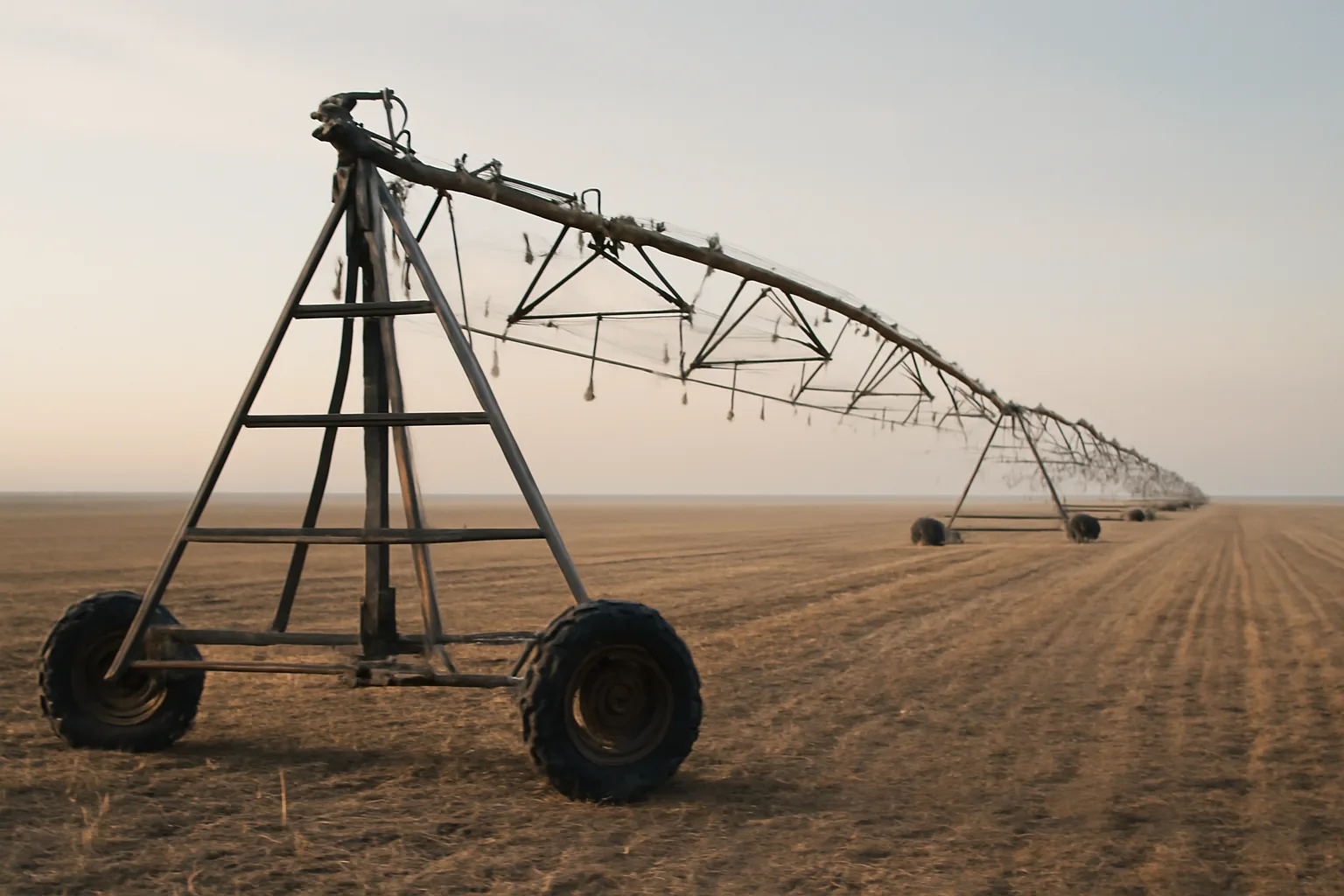
That gap is where people get sloppy. They hear "ag equipment" and assume every wrench turn is unregulated. The machine sitting in a Yuma County corn field is a mix of high-voltage electrical gear and structural steel, and if you chase the water back to the well, a separately licensed pump trade.
Stay on the mechanical side of the pivot and the state is not selling you a repair ticket. You still file ordinary business paper. You still obey electrical law when the job becomes wiring. You stay off well construction and pump installation unless you hold that license or you hire someone who does.
Skip the mythical "pivot repair card." Budget time instead to read the electrical and well statutes, then call the boards when a job sits on the line. Board staff will not bless your business plan. They will tell you whether a described task is inside their practice act. That call is cheaper than a cease-and-desist letter.
If you want the startup sequence around the license question, read how to start center pivot repair in Colorado. This page stays on the paper path.
What does Colorado actually license around a pivot?
Colorado licenses electricians through the State Electrical Board at the Department of Regulatory Agencies. It licenses plumbers through a separate board. It licenses water well construction and pump installation through the Board of Examiners at the Division of Water Resources. None of those boards titles its credential "center pivot repair." [1] [2] [4]
The electrical practice act lives in Title 12 of the Colorado Revised Statutes. The well and pump practice act lives in Title 37, Article 91. Different titles, different boards, different applications. Mixing them up is how people send money to the wrong office. [2] [3]
Here is the split I keep in my own head. Gearbox, tower box mechanicals, tires, alignment, sprinkler packages, and span steel: no dedicated state trade license. Control panels, collector rings, motor leads, and new circuits: treat it as electrical until DORA tells you otherwise. Column, bowl, or pump install work at the well: that is the DWR board, not a pivot shop card. [1] [4]
Local governments pile on. Denver runs a contractor licensing program for work inside the city. Most center pivot acres are not in Denver. A plains county may ask for little beyond a sales tax account. Confirm with the county building or clerk office where you hang your shingle, not where the pivot sits for one service call. [12]
| Work on or near the machine | Statewide trade license? | Board to confirm |
|---|---|---|
| Mechanical spans, gearboxes, tires, sprinklers | No dedicated license | None for that trade |
| Electrical wiring, panels, motors as electrical work | Yes, if it is electrical work | DORA State Electrical Board |
| Well construction or pump installation | Yes | DWR Board of Examiners |
| Selling parts from a Colorado location | Sales tax license | Colorado Department of Revenue |
| Forming an LLC | Filing, not a trade license | Colorado Secretary of State |
Colorado's Secretary of State charges $50 to file articles of organization for a limited liability company. That number is a filing fee, not a repair license. [5]
Does mechanical center pivot work need a state ticket?
Usually no. Replacing a center drive, resetting a tower, hanging a new sprinkler package, or welding a worn joint is mechanical field service. Colorado has not built a statewide occupation license around that work.
"Usually" is carrying weight in that sentence. The minute you land in a junction box or run new conductors, you have left the purely mechanical pile. A motor swap can be a mechanical unbolt or an electrical hookup. If you cannot describe the job without talking about conductors, get an electrician in the truck or hold the right DORA credential. [1] [2]
Owner-operators fixing their own machine sit in a different posture than a shop selling repair to the public. Owner work can still trip electrical or well rules. Do not invent a farm exemption the statute does not give you. I have not found a clean, blanket "farms are exempt from electrical licensing" line in the Colorado electrical article. If someone at the coffee shop swears it exists, make them show the section number.
Structural welding on a span is still welding. Advertise welding to the public and some cities want a contractor card. In unincorporated farm country the building department may shrug. Ask. Do not guess from a Denver web page and apply it to Kit Carson County.
Neighboring states draw this line differently. Arizona and Texas shops run into their own contractor and electrical maps. If you also work across a border, read center pivot repair license in Arizona and how to start center pivot repair in Texas before you treat Colorado paper as portable.
When does pivot work become licensed electrical work?
The moment you perform electrical work as Colorado defines it, you need the right State Electrical Board license or you hire a person who has one. The board licenses classes such as residential wireman, journeyman electrician, master electrician, and electrical contractor. Confirm which class matches the voltage and the contracting structure you actually use. Do not assume a residential wireman card covers a 480-volt pivot. [1] [2]
Most full-size machines on the eastern plains run three-phase power. Collector rings, percent timers, safety circuits, and tower boxes are not appliance cords. Troubleshooting a ground fault in July is electrical work even when the customer calls it "pivot repair."
Here is what I would do. Keep a written split. Mechanical techs stay out of live panels. A licensed electrician owns terminations, new circuits, and service equipment. If you are a one-person shop, either get licensed or subcontract every electrical hour. Subcontracting is not a loophole if you then land the wires yourself.
Permits are local. Unincorporated land and a home-rule city do not use the same desk. An inspection on a new service is not the same paper as swapping a bad coil in an existing enclosure. Ask the electrical inspector in that jurisdiction before you pull a feeder. DORA's laws and rules page is the statewide starting point, not a permit. [1]
Processing times and exam seats change. I will not quote a wait. Confirm current applications and fees with the State Electrical Board. Anybody publishing a live DORA fee on a blog is asking to be wrong next quarter.
Is well or pump work the same as center pivot repair?
No. Colorado separately licenses water well construction and pump installation. That credential comes from the Board of Examiners of Water Well Construction and Pump Installation Contractors, under the Division of Water Resources, not from a pivot manufacturer and not from DORA's electrical board. [3] [4]
If your invoice stops at the pivot (spans, towers, sprinklers, the machine's own drive train), you are probably outside that well statute. If your invoice includes constructing, reconstructing, or installing pumping equipment at the well, you are in Article 91 territory. Read the statute. Then ask the board about the exact job, because "repair" at a wellhead is where informal shop talk gets people in trouble. [3]
The well board exists because bad well work contaminates aquifers and wrecks other people's water rights. That is a different public risk than a flat pivot tire. Do not treat a DWR contractor license as a marketing badge for span repair. Do not treat a span-repair shop as a pump company.
Fees, bond, and exam rules for well contractor licenses change. Confirm them with the board. I am not going to invent a current well-license price. [4]
What business paper do you need in year one?
Trade licenses are not the first pile. The first pile is ordinary Colorado business paper. File an entity if you want one, get a federal EIN, open the state tax accounts that match what you sell, and handle payroll accounts if you hire.
Most small shops file as a limited liability company with the Colorado Secretary of State. That office charges $50 to file articles of organization. Periodic report fees sit on the same fee schedule. Confirm the live number on the Secretary of State fee page before you write a check, because fee tables move. [5]
You can operate as a sole proprietor. That is legal. It is also how personal tools and personal savings get mixed into a shop lawsuit. I would file the LLC unless you have a tax reason not to. I am not your lawyer.
The IRS does not charge a fee to issue an EIN when you apply on IRS.gov. Their page states, "Applying for an EIN is a free service offered by the Internal Revenue Service." Skip the paid EIN middlemen. [8]
Sell parts or taxable services from a Colorado location and you need a sales tax license from the Department of Revenue. The CR 100 path is the one shops actually use. State sales tax is not the only layer. Cities, counties, and special districts stack on top. [6] [7]
Colorado's state sales tax rate is 2.9 percent, before city, county, and special-district taxes. That 2.9 percent figure is the state piece only. A parts counter in Greeley and a parts counter in an unincorporated plains county will not collect the same combined rate. Look up the location on the Department of Revenue rate tools. [7]
Farm parts can carry exemption certificates when the buyer qualifies. That is a certificate problem, not a vibe. If a grower says "it's ag, so no tax," get the form the Department of Revenue actually wants. Guessing on exemptions is how audits start.
Employees trigger more paper: wage withholding with Revenue, unemployment insurance with the Colorado Department of Labor and Employment, and workers' compensation coverage. CDLE's employer pages are the confirmable source, not a Facebook group. [9] [10]
ValleyRepairPath publishes a $179 one-time Valley/Zimmatic Parts Kit for people stocking common wear items. That kit is not a license, not a bond, and not a substitute for DORA or DWR paper.
Do cities and counties add a contractor card?
Sometimes. Colorado does not run a single statewide general contractor license for every trade. Cities and some counties fill that hole with their own contractor licensing. Denver publishes a contractor licensing program with its own classes and exams. A lot of pivot country does not. [12]
If your shop address sits inside a home-rule city, call that city's building department before you advertise. If you only roll trucks from an unincorporated site and you never pull building permits, the city card may never come up. The first time you repair a pivot that also needs a new service on a parcel inside city limits, it can come up fast.
I would not buy a Denver contractor class you will never use. I would not ignore a town that actually licenses mechanical contractors and then park a service truck on Main Street with your shop name on it. Match the card to the place you are legally doing business.
County sales tax licensing and city business occupancy licenses get tangled in conversation. They are different counters. The treasurer or finance office handles tax. Community development handles contractor cards. The clerk may handle a general business license. Ask each desk what it issues. Bring your SOS entity number so you are not describing a trade that does not exist on paper.
How much does center pivot repair cost in Colorado?
There is no official Colorado average invoice for center pivot repair. USDA's Census of Agriculture tracks irrigation on farms. It does not publish shop-ticket averages for gearbox jobs in Weld County. Anybody quoting a single statewide "typical repair cost" is inventing a statistic. [11]
Real jobs cluster. A field call for a stuck tower, a bad tower box, or a collector ring can stay in the hundreds to low thousands if parts are on the truck. A center drive or wheel drive replacement costs more because the part costs more and the machine has to be safe to work under. A full sprinkler package on a quarter-section machine is a parts-heavy job. A bent or dropped span is a different business, closer to structural repair plus crane time.
Travel is a silent line on the eastern plains. A shop in Fort Morgan and a machine south of Burlington are not a free drive. Fuel, windshield time, and a second tech for heavy lifts show up on the ticket whether you itemize them or hide them in labor.
Labor rates are local. Front Range electrical subcontract rates are not Yuma County mechanical rates. I will not invent a shop hourly number. Call two dealers and one independent and ask for a written estimate on the same job. The spread will teach you more than a blog range.
Parts pricing moves with steel, freight, and which brand is on the span. Valley, Zimmatic, Reinke, and Pierce do not share one list. Used gearboxes look cheap until they fail in July. I would rather sell a known rebuild than a mystery used drive during peak season.
If a grower wants a number for budgeting, give ranges by failure type and write "parts plus field labor plus travel, quote after we see it." That is honest. A fake statewide average is not.
How long does center pivot repair take in Colorado?
It depends on the failure, the parts on the truck, and the week of the irrigation season. There is no Colorado board clock and no USDA table for "hours per repair." Treat any single number you hear at the cafe as a story, not a standard. [11]
Same-day work happens. A tower box, a stuck alignment switch, a sprinkler that blew off, or a tire you already stock can be done before the field wilts. That only holds if the part is in the bed and the field is reachable. Mud, a locked gate, or a 480-volt problem you are not licensed to touch will end the day early.
Multi-day work is normal for drivetrain jobs, span structure, and anything waiting on freight. Electrical gear and gearboxes are not always on a Colorado shelf. Peak season (roughly the heart of the irrigation window on the plains) stretches both labor and parts. A January rebuild in the shop runs on a different calendar than a July breakdown.
I would not promise a clock time on a first phone call. I would give a parts-dependent window after I see the machine, and I would say so. Growers remember the promise, not the excuse.
Staffing a first year? Plan idle winter shop time and brutal June phone volume. That pattern is operational, not licensed. Hiring a second tech in May without workers' comp and UI accounts is how a good season becomes a CDLE problem. [9] [10]
What insurance and vehicle paper actually shows up?
If you have employees, Colorado expects workers' compensation coverage. CDLE's Division of Workers' Compensation publishes employer insurance requirements. Confirm whether any narrow exemption applies to your facts. Do not take a coffee-shop exemption as law. [9]
Unemployment insurance is a separate CDLE account. Withholding is a Department of Revenue account. They are not the same login. [10]
General liability and commercial auto are not state "repair licenses," but they are how you stay in business after a truck tap or a dropped span. Inland marine or tools coverage matters if your living sits in a service bed. I would buy the insurance before I bought a vinyl wrap for the truck.
Hauling long spans or a full truck of pipe on a public road can trigger size-and-weight rules and, for some configurations, CDL territory. That is federal and CDOT paper, not DORA. If your business plan is "we move machines," talk to a licensing pro who handles oversize loads. If you only carry gearboxes and sprinklers, you are in ordinary commercial-auto land.
Working alone does not erase auto insurance or premises liability. It may change the workers' comp picture. Confirm that with a Colorado agent who reads the statute, not with a forum post.
How do you confirm fees, exams, and scope with the boards?
You confirm them on the board's current page, then you confirm again by phone if the job is ugly. Fees, exam vendors, and processing queues change. This site will not invent a current DORA fee, a DWR exam date, or a turnaround promise. ValleyRepairPath is an independent publisher, not a law firm and not a service company.
Start here, then download the application that is actually posted this month:
State Electrical Board laws and applications at DORA. Ask whether your described task is electrical work and which license class can contract it. [1]
Board of Examiners well and pump contractor information at DWR. Ask whether the wellhead task is construction, reconstruction, or pump installation under Article 91. [3] [4]
Secretary of State business fee schedule for entity filings. [5]
Department of Revenue sales tax license page and rate tools. [6] [7]
CDLE employer pages for workers' compensation and unemployment insurance. [9] [10]
Write down the name of the person you spoke with and the date. Boards do not exist to be your counsel, and a phone note beats memory when a later inspector asks why you thought you were outside the act.
Comparing how other states paper this trade? center pivot repair license in California and how to start center pivot repair in Arizona show how fast the story changes once you leave Title 12 and Title 37.
What would I actually do if I were starting a Colorado shop?
I would file the LLC, get the free EIN, and open the sales tax license before I ordered shirts. I would write a one-page scope: mechanical pivot repair only, electrical subcontracted, no well or pump work. That scope goes on every estimate. [5] [6] [8]
I would call DORA with two sample jobs ("replace center drive, reuse existing leads" versus "land a new feeder to a panel") and write down the answers. I would call DWR only if I planned to touch pumps. I would not pay for a well contractor exam as a branding exercise. [1] [4]
I would buy liability and commercial auto before a second toolbox. I would not hire a W-2 tech until withholding, UI, and workers' comp were live. A 1099 label does not turn an employee into a vendor if you control the hours and the truck. [9] [10]
I would stock the failure parts that strand growers in July, not a showroom of rare gearboxes. I would keep winter for rebuilds. I would refuse same-day promises when freight is the real clock.
I would skip any course or kit that claims to be a Colorado pivot license. That product does not exist. Spend the money on a licensed electrician relationship and a parts vendor who actually answers the phone.
Other state guides can wait until you have Colorado paper right. If you later add a second shop, how to start center pivot repair in Arkansas and center pivot repair license in Alabama are different legal worlds. Do not copy their checklists onto a Colorado application.
What wastes money on the Colorado paper path?
Paying a website to "file your EIN" is a waste. The IRS does that for free. [8]
Buying a city contractor license for a city you do not work in is a waste. Read the city that matches your shop and your permitted jobs. [12]
Treating a manufacturer dealer plaque as a state license is a waste, and it can become a deceptive-trade problem if you advertise it that way.
Ignoring sales tax because "it's farm" is a waste when the assessment arrives. Use the Department of Revenue certificate rules. [6] [7]
Filing well-contractor paperwork because it sounds impressive is a waste if you will never set a pump. That board is not a marketing department. [4]
Promising 24-hour repair on every call is a waste of reputation. Parts and weather do not care about your flyer.
Want a simple next step after you understand the boards? The publisher's start page is at /start. Read the statutes first. The start page will still be there.
Frequently asked questions
Do you need a license for center pivot repair in Colorado?
No statewide license by that name exists. Mechanical work on the machine is not its own licensed trade. Electrical work can require a State Electrical Board credential. Well construction and pump installation require a DWR Board of Examiners license. You still need ordinary business and tax paper. Confirm scope with the board that matches the task.
How much does center pivot repair cost in Colorado?
There is no official statewide average. Small field fixes can stay in the hundreds to low thousands if parts are on the truck. Drivetrain, sprinkler packages, and structural span work cost more because parts and lifting cost more. Travel on the eastern plains is a real line. Get a written estimate on the actual machine. USDA tables do not publish shop tickets.
How long does center pivot repair take in Colorado?
Same-day is possible for stocked, simple failures. Drivetrain, structure, and freight-dependent electrical parts often take days, sometimes longer in peak irrigation weeks. There is no board timeline and no Census table for hours per job. Quote a window after you see the machine and know whether the part is local.
Is a journeyman electrician license required to change a pivot motor?
If the job is electrical work under Title 12, someone on that job needs the right DORA electrical license. Unbolting a motor and landing new conductors are not the same task. A residential wireman card may not match 480-volt irrigation equipment. Describe the job to the State Electrical Board and confirm the class before you bid it.
Do I need a well contractor license to work on the pivot itself?
Usually no, if you stay on the machine and never construct a well or install pumping equipment. Article 91 licenses well construction and pump installation through DWR's Board of Examiners. Ask that board before you work on a pump, column, or wellhead. A pivot gearbox job is not a well license event.
What business license does a pivot shop need in Colorado?
Plan on an entity filing with the Secretary of State if you want an LLC, a free IRS EIN, and a Department of Revenue sales tax license if you sell taxable parts or services. Cities may add a business or contractor card. There is no statewide "pivot shop" card. Confirm each desk that matches your address and what you sell.
Does Colorado charge sales tax on farm parts?
State sales tax starts at 2.9 percent, then local taxes stack. Some farm purchases qualify for exemption if the buyer gives you the certificate Revenue actually requires. "It's ag" is not a certificate. Look up the location rate and keep exemption forms. Guessing is how shops fund audits.
Can I work as a sole proprietor without an LLC?
Yes. Colorado does not force a pivot mechanic into an LLC. Many people still file one because it separates shop paper from household paper. The SOS articles fee for an LLC is a published $50 figure, which you should reconfirm on the fee schedule. Talk to a Colorado accountant about tax treatment. This is not legal advice.
Do I need workers' compensation if I work alone?
Hiring is what usually triggers the workers' compensation requirement. A true one-person shop with no employees sits in a different place than a shop with W-2 techs. Confirm your facts on CDLE's Division of Workers' Compensation employer pages. Do not rely on a forum exemption. Unemployment insurance is a separate CDLE account if you have employees.
Are there agricultural exemptions for electrical work on a pivot?
Do not assume a blanket farm exemption. Colorado's electrical article is the text that matters, and a coffee-shop summary is not the article. If the task is electrical work, plan on a licensed electrician unless the board points you to a written exemption that matches those facts. Ask DORA. Get the section number.
What about a contractor license in a small plains town?
Many unincorporated plains counties do not run a Denver-style contractor program. Some towns still want a business license or a contractor card if you pull permits or keep a shop inside city limits. Call the building department and the clerk for the address on your truck doors. Do not copy Denver's rules onto a town that never adopted them.
How do I confirm current board fees?
Use the live DORA Electrical applications or laws page, the DWR Board of Examiners materials, and the Secretary of State fee schedule. Then call if the posted PDF and the online cart disagree. Fees move. This publisher will not invent a current exam fee or a processing time, and nobody here can guarantee approval.
Do I need a CDL to haul pivot parts?
Ordinary parts and gearboxes in a service truck usually sit under regular commercial-auto rules, not a CDL. Hauling long spans, a full machine, or an oversize load on a public road is a different question. That is CDOT and federal size-and-weight territory. If moving machines is the business, get advice from someone who files those permits for a living.
Is there a state exam just for center pivot technicians?
No. Colorado has not built a center pivot technician exam. The exams that exist are for trades the General Assembly actually licensed, including electricians and well or pump contractors. Manufacturer training can make you faster on a brand. It does not replace a statute. Skip any seller who implies otherwise.
Sources
- Colorado DORA, Electrical Laws, Rules and Policies: Colorado regulates electricians through the State Electrical Board; laws and rules for electrical licensing are posted by DORA.
- Colorado General Assembly, Colorado Revised Statutes Title 12 (2023): Title 12 contains the electrician (Article 115) and plumber (Article 155) practice acts used to decide when a statewide trade license is required.
- Colorado General Assembly, Colorado Revised Statutes Title 37 (2023): Title 37, Article 91 is the Water Well Construction and Pump Installation Contractors statute, separate from any pivot-repair credential.
- Colorado Division of Water Resources, Well Construction and Inspection: DWR administers well construction inspection and the contractor licensing program under the Board of Examiners.
- Colorado Department of Revenue, Sales Tax License: Businesses that sell taxable goods or services in Colorado obtain a sales tax license through the Department of Revenue.
- Colorado Department of Revenue, Sales and Use Tax Rates: Colorado's state sales tax rate is 2.9 percent, with additional local and special-district taxes stacked by location.
- Internal Revenue Service, Apply for an Employer Identification Number (EIN) Online: Applying for an EIN on IRS.gov is a free IRS service.
- Colorado Department of Labor and Employment, DWC Employers: CDLE's Division of Workers' Compensation publishes employer insurance requirements for businesses with employees.
- Colorado Department of Labor and Employment, Unemployment Insurance for Employers: Colorado employers file unemployment insurance accounts through CDLE, separate from Revenue withholding accounts.
- USDA NASS, 2022 Census of Agriculture Colorado Chapter 1: The Census of Agriculture publishes Colorado farm statistics, including irrigation, but not shop-level pivot repair prices or job durations.
- City and County of Denver, Contractor Licensing: Some Colorado cities, including Denver, run local contractor licensing programs on top of statewide trade licenses.